LS02 · fully automatic silent lock body
LOCK.LINK pursues the character of an industrial artwork
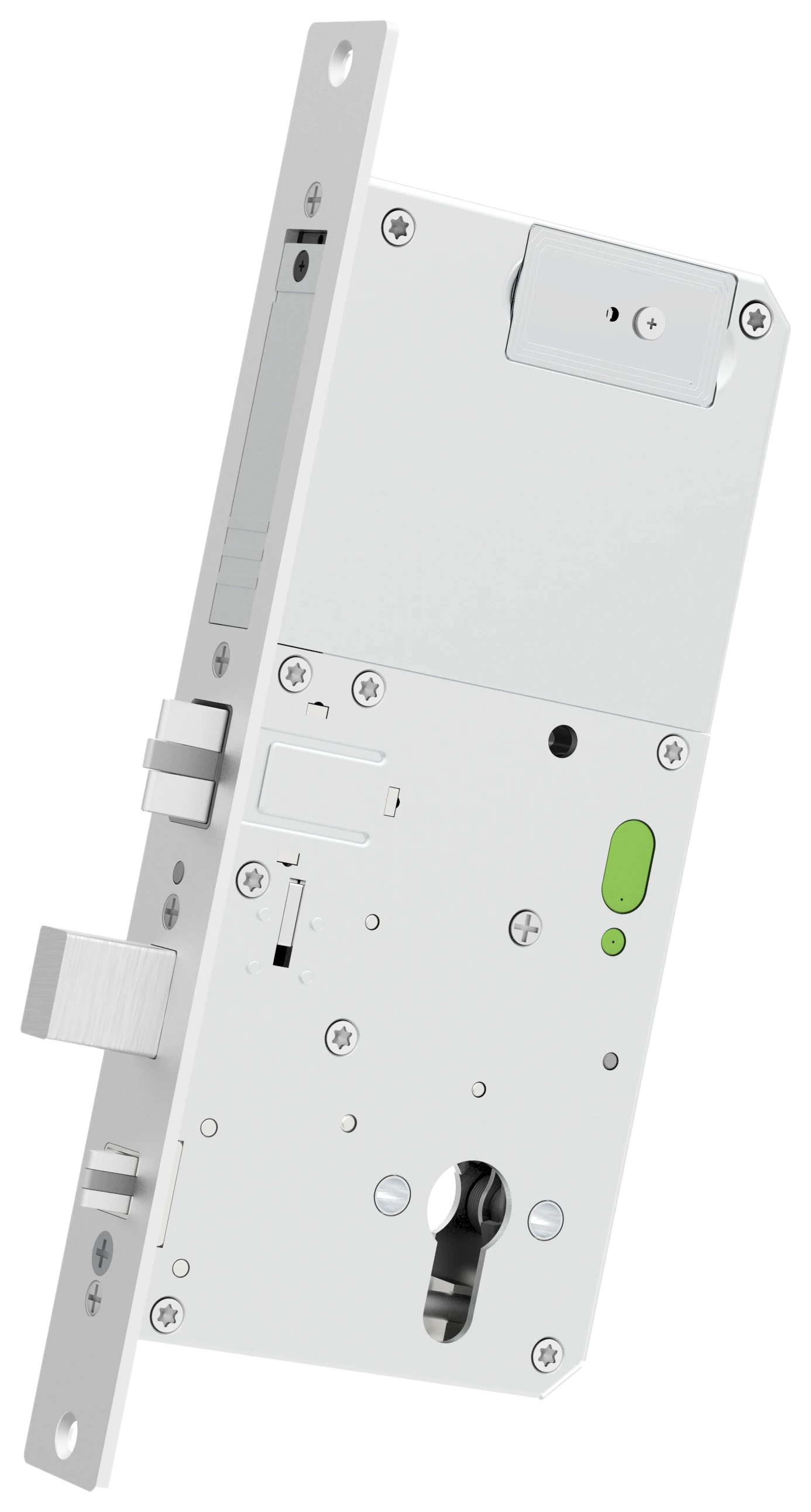
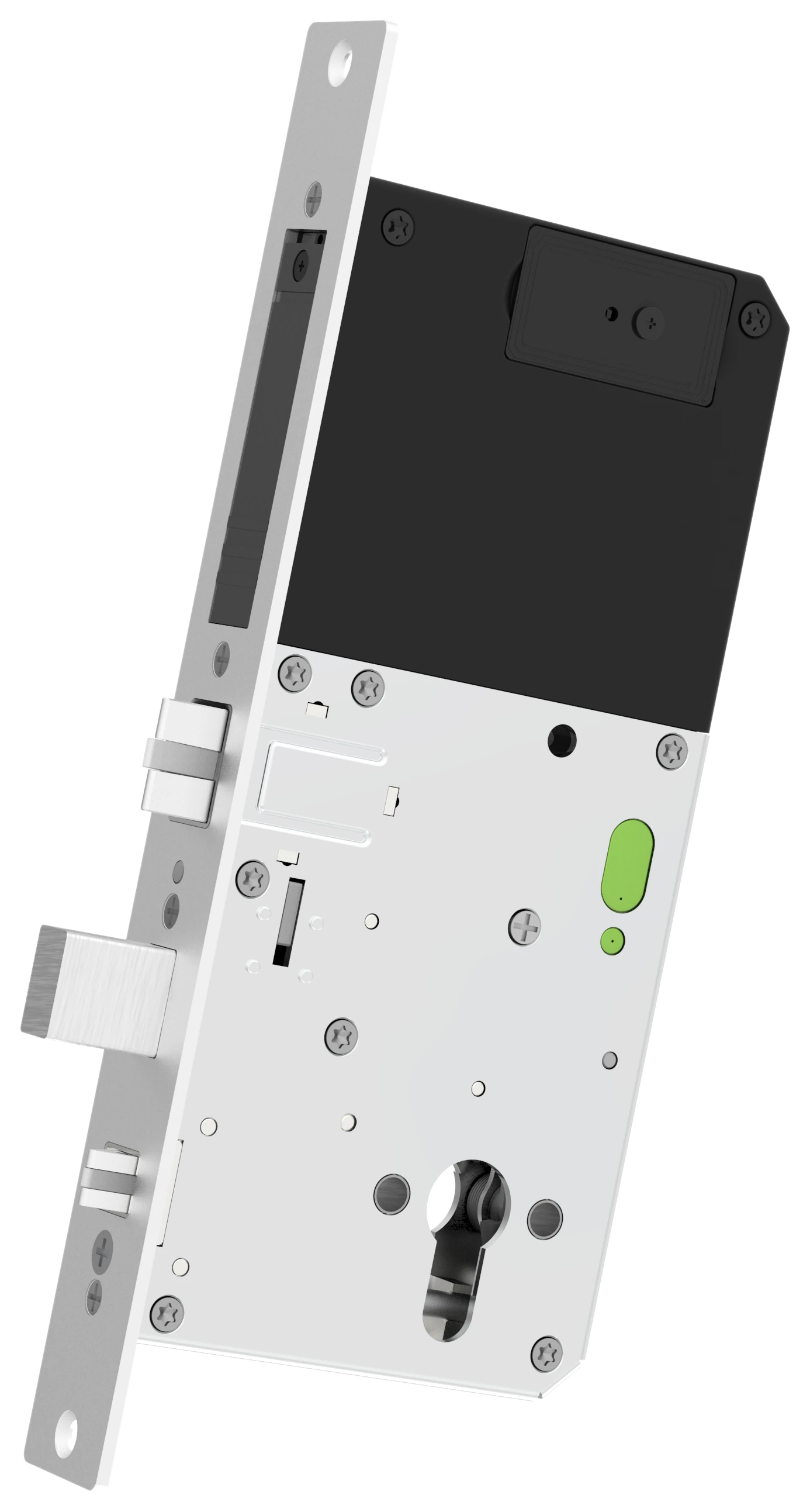
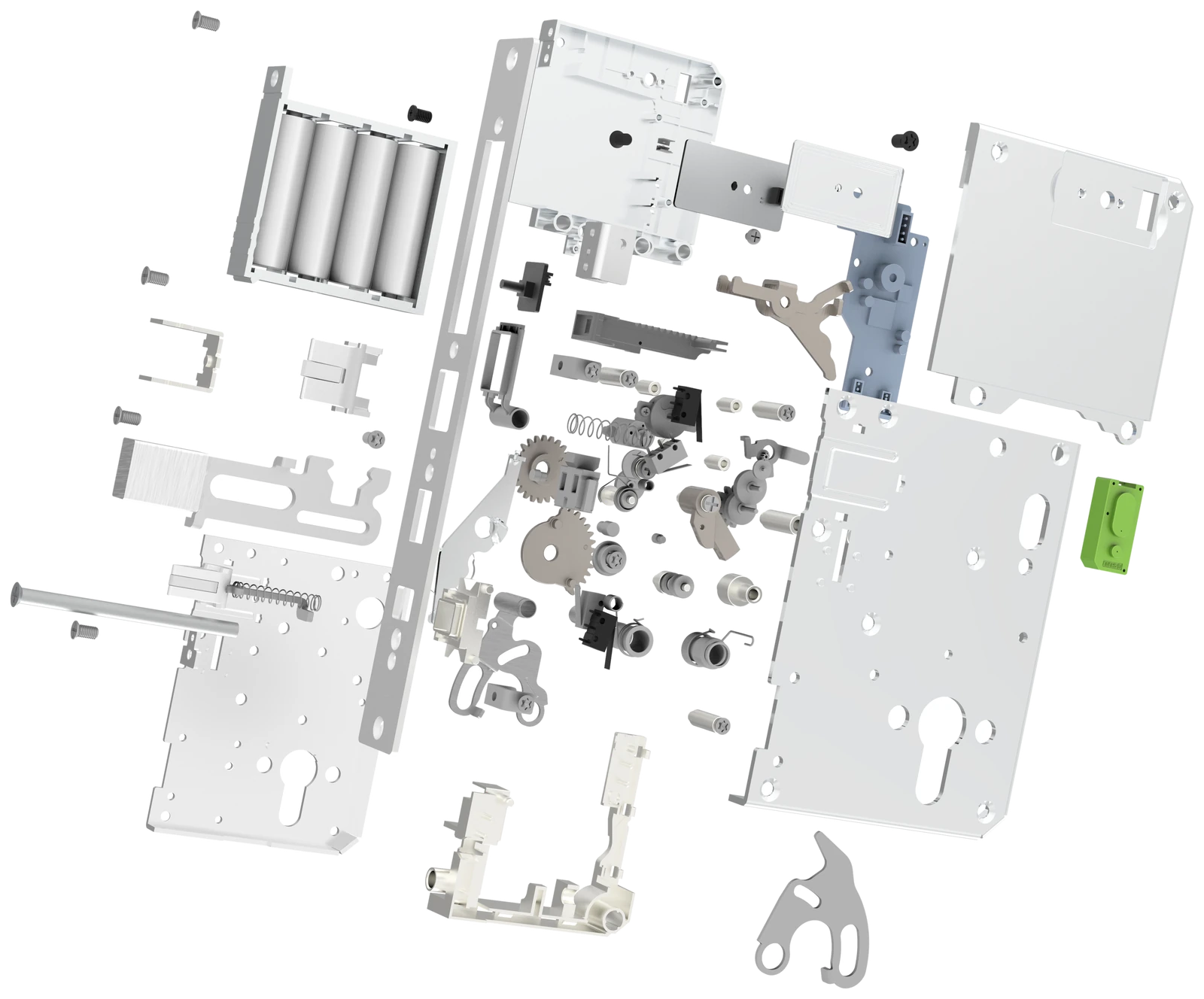
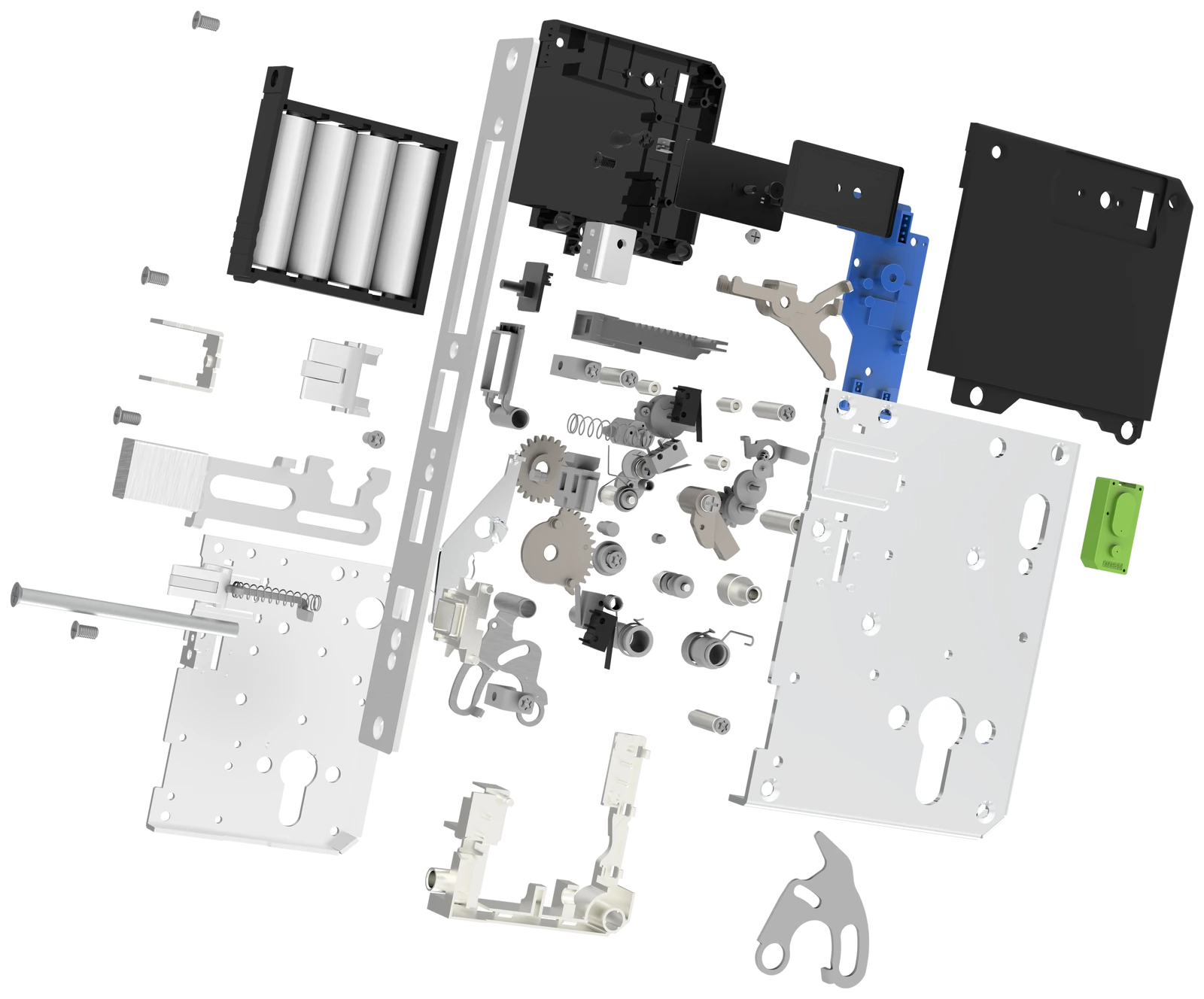
The first ultra-integrated one-piece electronic lock body
Core capabilities
Four core capabilities, none of them vague.
Ultimate silence
Under 60 dB opening and closing, so nobody is disturbed late at night.
Automatic deadbolt
Shut the door and it locks, open it and walk away, with six micro-switch signals.
Ultra-low power
Four AA cells, two years of running.
One-piece structure
No wires, 40% fewer parts, a cutout of only 208 mm.
Ultimate silence
Hotel silent locks, by LOCK.LINK。
95% of the quiet work is done — the last 5% is the lock
Together those eight cover 95% of the noise; the remaining 5% is the lock — and a silent lock costs no more.
A 60 dB standard, measured at 50 dB one metre away
More than ten decibels down, which is more than half the perceived loudness — from a vacuum cleaner to two people talking face to face.
Three structures remove the noise at its source
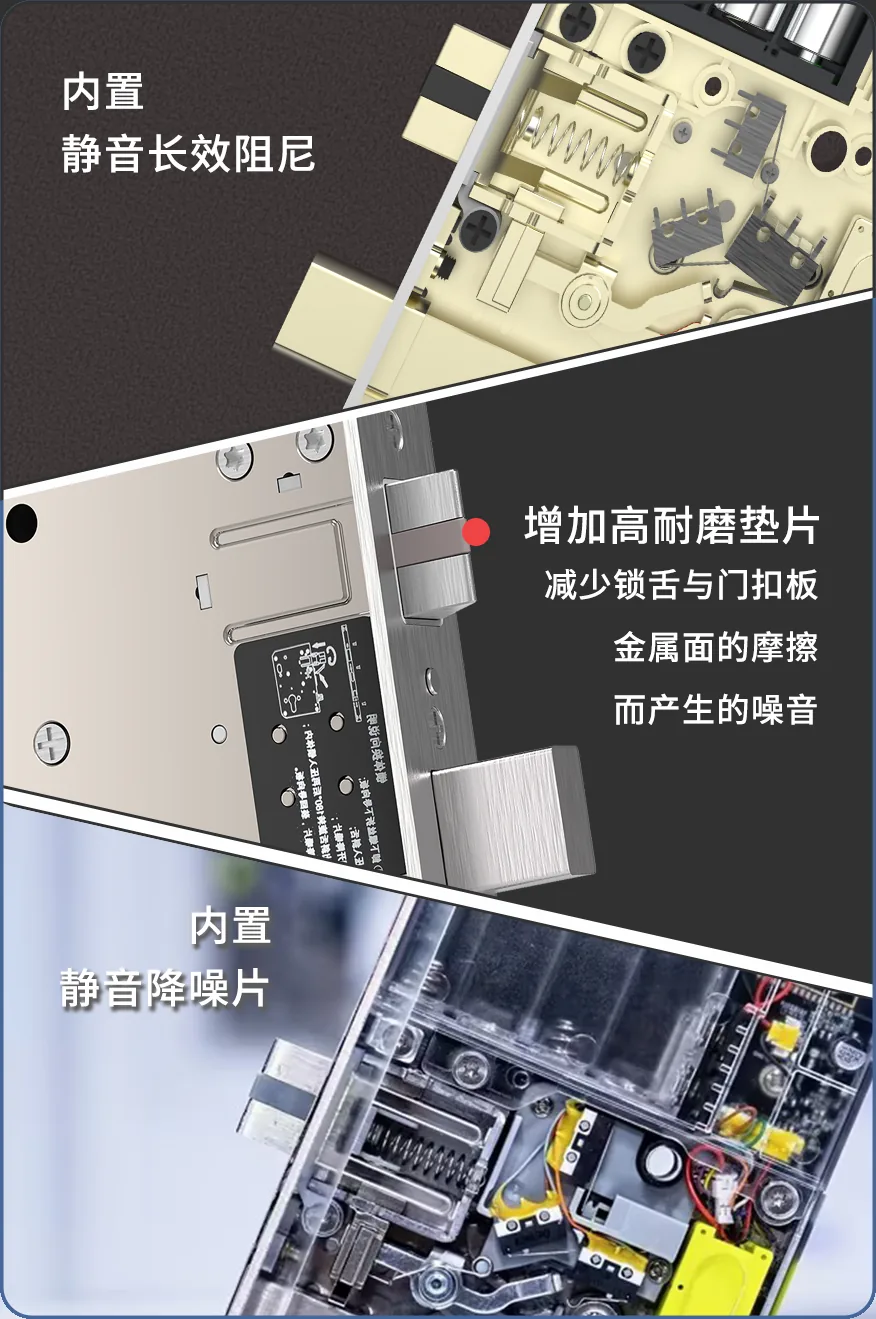
- Flip latch — it pivots out of the way rather than pressing and springing, so the clang never happens
- Anti-collision pad — it cushions the impact as the door closes, so metal never strikes bare metal
- Silent damper — like a hand catching a falling ball, absorbing the energy slowly
A tiny cutout, closing the path the noise escapes through
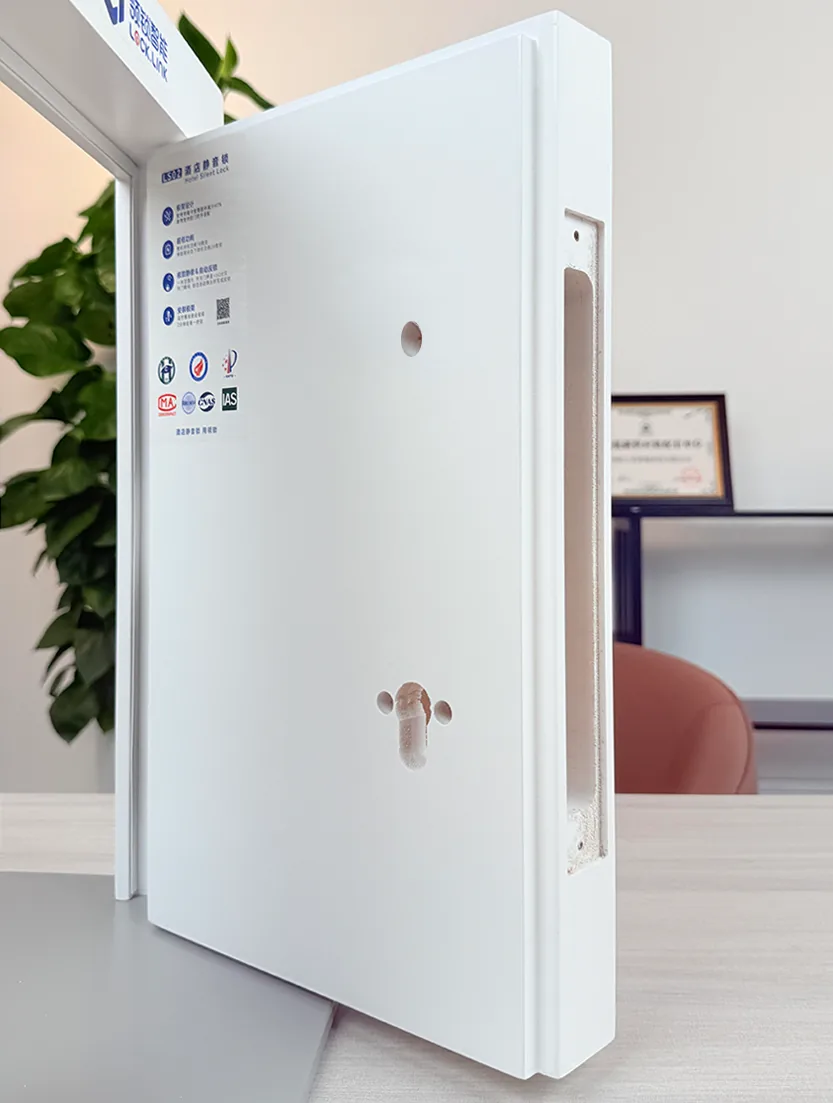
The body is highly integrated: on the face only the gourd-shaped lock-head hole and a light pipe for the indicator, and on the side a single 20.8 cm slot, so the opening area is just 20% of a traditional hotel lock — the door’s own soundproofing stays intact.
Close to three years of work · a genuinely new hotel silent lock · at no extra cost to buy or swap in
Automatic deadbolt
Shut it and it locks,
open it and walk away.
When a guest closes the door from outside, the latch shoots out and locks it at once; when a staff member closes it, it does not, so service flows better.
Guest closes the door
Locks automatically — a luxury-hotel function
Staff closes the door
No automatic locking, so service flows better
Anti-collision
The bolt retracts automatically as the door opens, so bumping it cannot damage the body or the frame.
Anti-picking
Once closed, neither latch nor bolt can be pushed back from outside, which defeats technical entry.
Four warnings, so anything unusual is felt at once.
Low battery
A warning well before the cells run down, so they can be changed in time and nobody is suddenly locked out.
False lock
If the latch does not seat, it is flagged as a false lock in real time, so a door is never left unlocked.
Door left open
An immediate alert if the door is not properly shut, so a guest who forgets is noticed at once.
Motor not locked
An alert if the motor fails to complete the locking stroke, so every close really does lock.
Fallbacks: an emergency key opens a room that is deadbolted, and pressing the inside handle releases it mechanically, so a power cut is no obstacle.
Ultra-low power
Four AA cells,
good for two years.
Twenty open-close cycles a day and over two years of running. Standby draw from 20 µA, thriftier than a traditional hotel proximity lock, with batteries changed in years. The motor is constant-voltage direct-drive, with dual power one in use, one spare — if one supply fails the other takes over, so a power problem never leaves the lock standing open for long.
See the low-power details →Standby draw compared (lower is better; measured test data)
Standalone standby 20 µA · networked standby 26 µA · per unlock: card 50 µAh / phone 27 µAh
One-piece structure
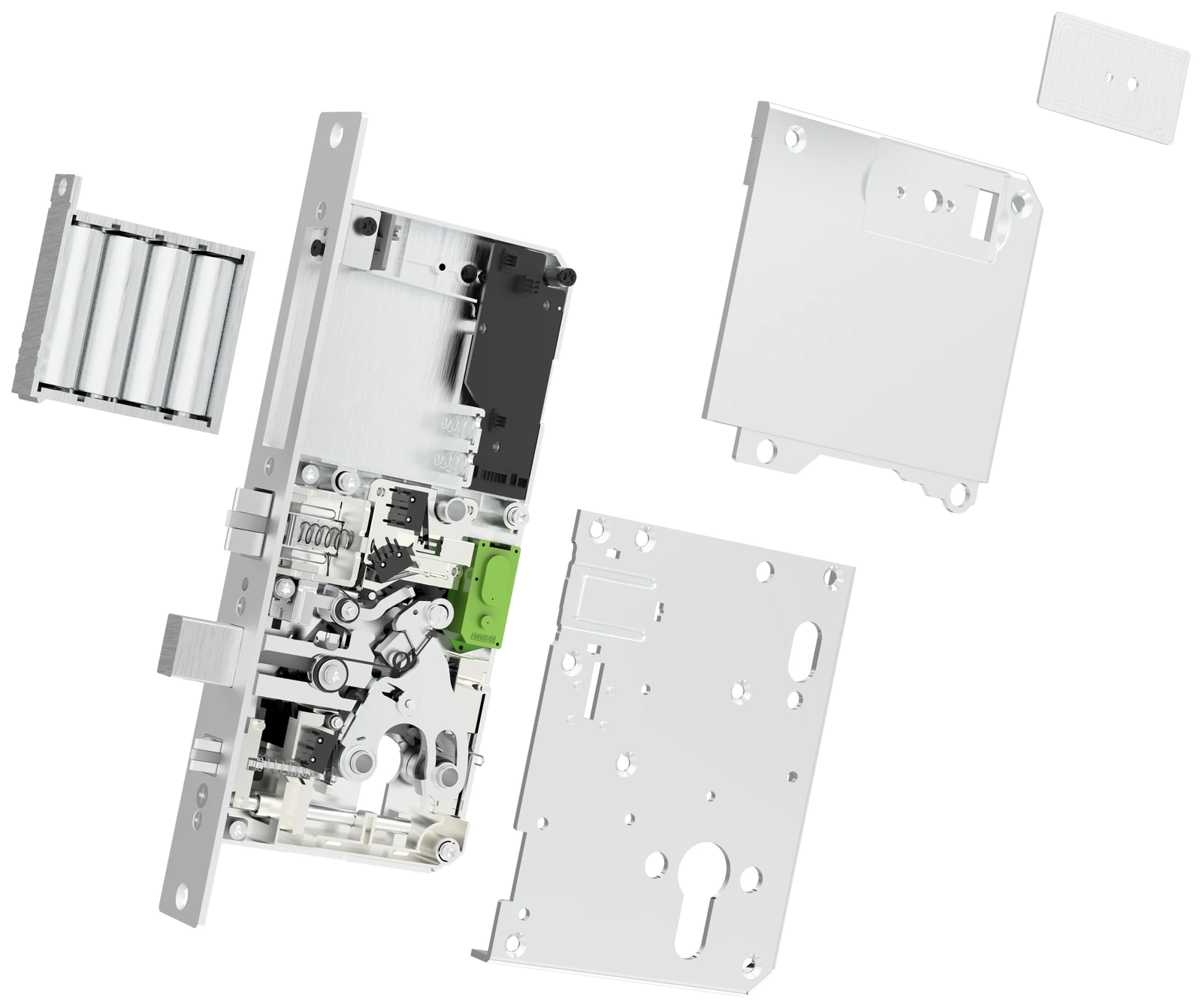
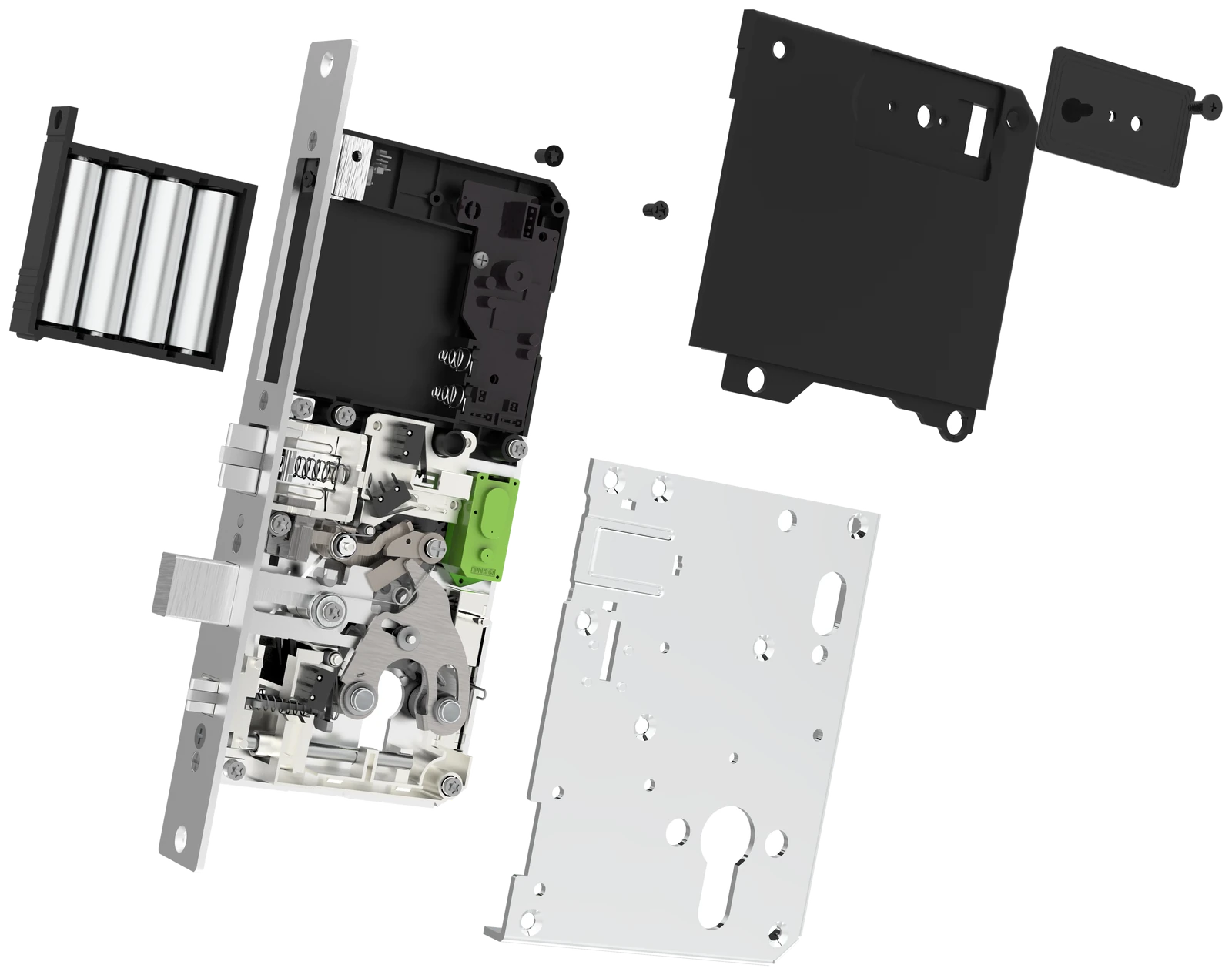
Four parts become one whole.
Board, battery bay, mechanical body and automatic motor — moulded as one. The simpler the structure, the lower the complexity and the smaller the chance of failure. Parts are down 40%。
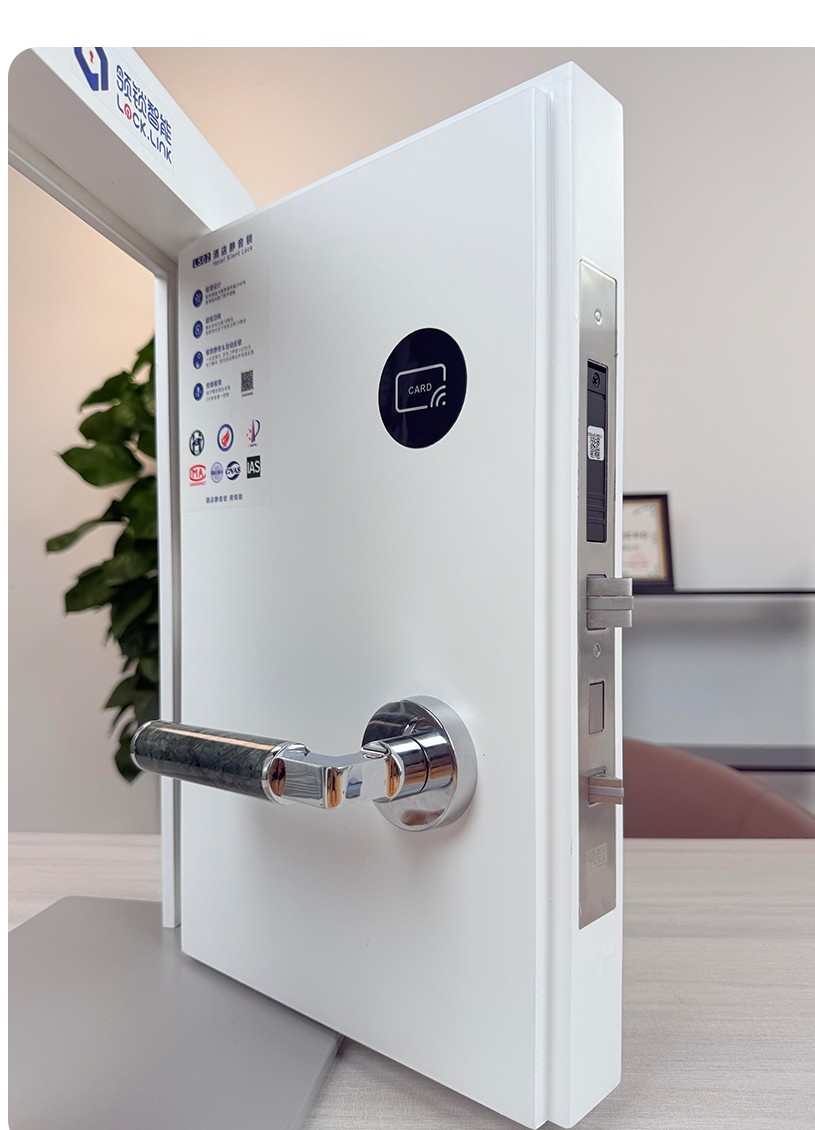
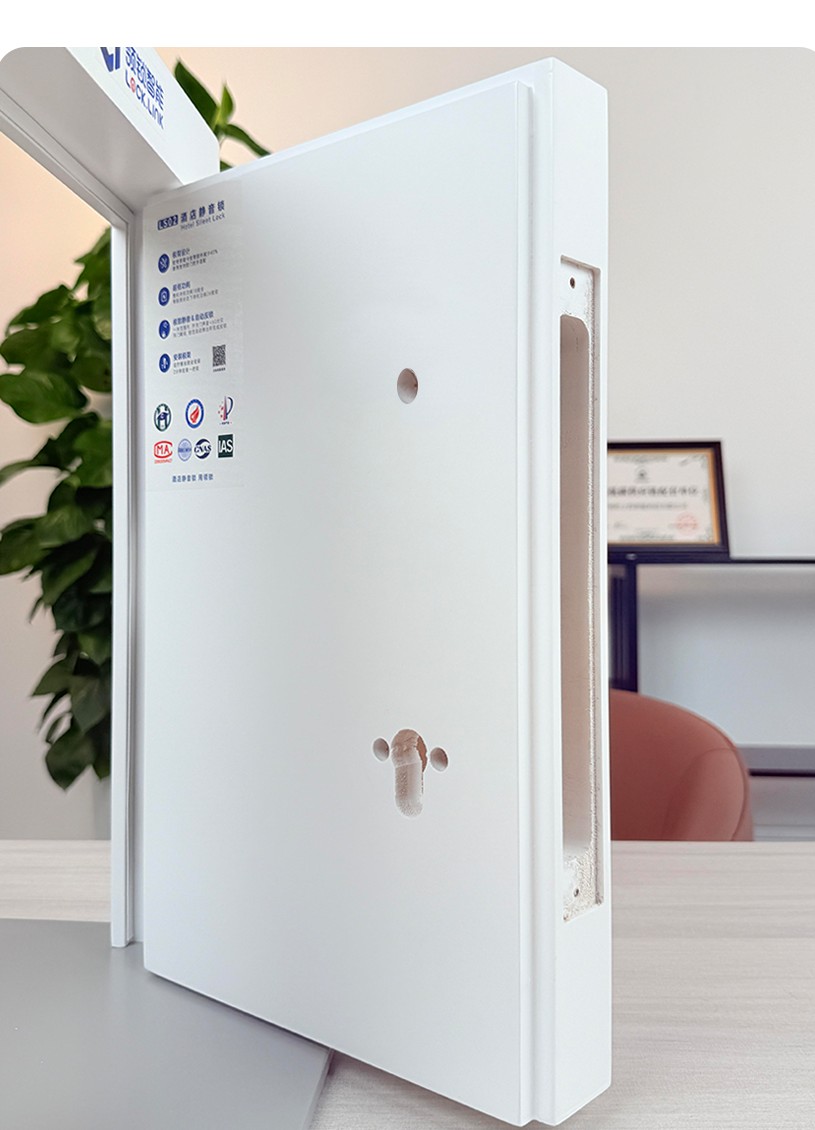
A minimal cutout avoids serious damage to the door, fits the body more closely and delivers the silent result.
A small body, a small cutout —
less damage to the door.
The side cutout is shorter by over 80 mm, so an older door is swapped in place with no new hole and no damage.
- 96×206×20mmbody (W × L × thickness)
- 260×30mmfaceplate
- Gourd-shaped cylinder cutoutthe opening follows the cylinder’s shape, smaller and quieter
- 32mmhandle hole centres
- 65mmdoor edge to mounting centre
How it goes on: so simple that anyone who can turn a screw can fit it
- 01Fit the bodyInside the door, hidden in place
- 02Fit the lock headReader inside or outside
- 03Fit the handleSeven series to choose from
- 04Fit the badgeThe tap badge goes on and it is done
2 minutesto swap a lock, in place on the existing door, with no complicated work.
Ways to open
Every opening is a settled feeling.
Cards and phones carry the daily traffic, while two purely mechanical routes bypass the electronics entirely — the door still opens even if the board fails。
Mainstay · every hotel setting
One-card access
One card opens every lock in the hotel, covering every guest every day.
- One secret per card · copies fail · reads split from writes
- Loss takes effect at once · issuing a new card voids the old one, pushed live on networked models
- 30mm reliable sensing · a full-function NFC module
Mainstay · the phone is the key
Mobile tap
Unlock the phone, one tap and it opens.Near-field verified, and it works with no network.
- 1
NFC wake
Tap the NTAG, nothing to set up, opening WeChat, Alipay or your own app
- 2
Bluetooth or remote
The app unlocks over Bluetooth broadcast or remotely, with the permission check in the cloud
The LOCK.LINK tap NTAG · metal-resistant, so it can go straight onto a steel door or in a lift.
Two purely mechanical fallbacks · they bypass the board, so the door opens even if it fails
Mechanical key
A grade-C anti-theft cylinder, purely mechanical, with no reliance on electronics or power.
Mechanical release inside
At any time, pressing the handle inside releases the door physically through a purely mechanical linkage.
There is also an emergency unlock: the emergency key opens a deadbolted room, provided the lock is otherwise working.
Automatic deadbolt, four warnings, 6,000 log entries · see the deadbolt section →
A closer look
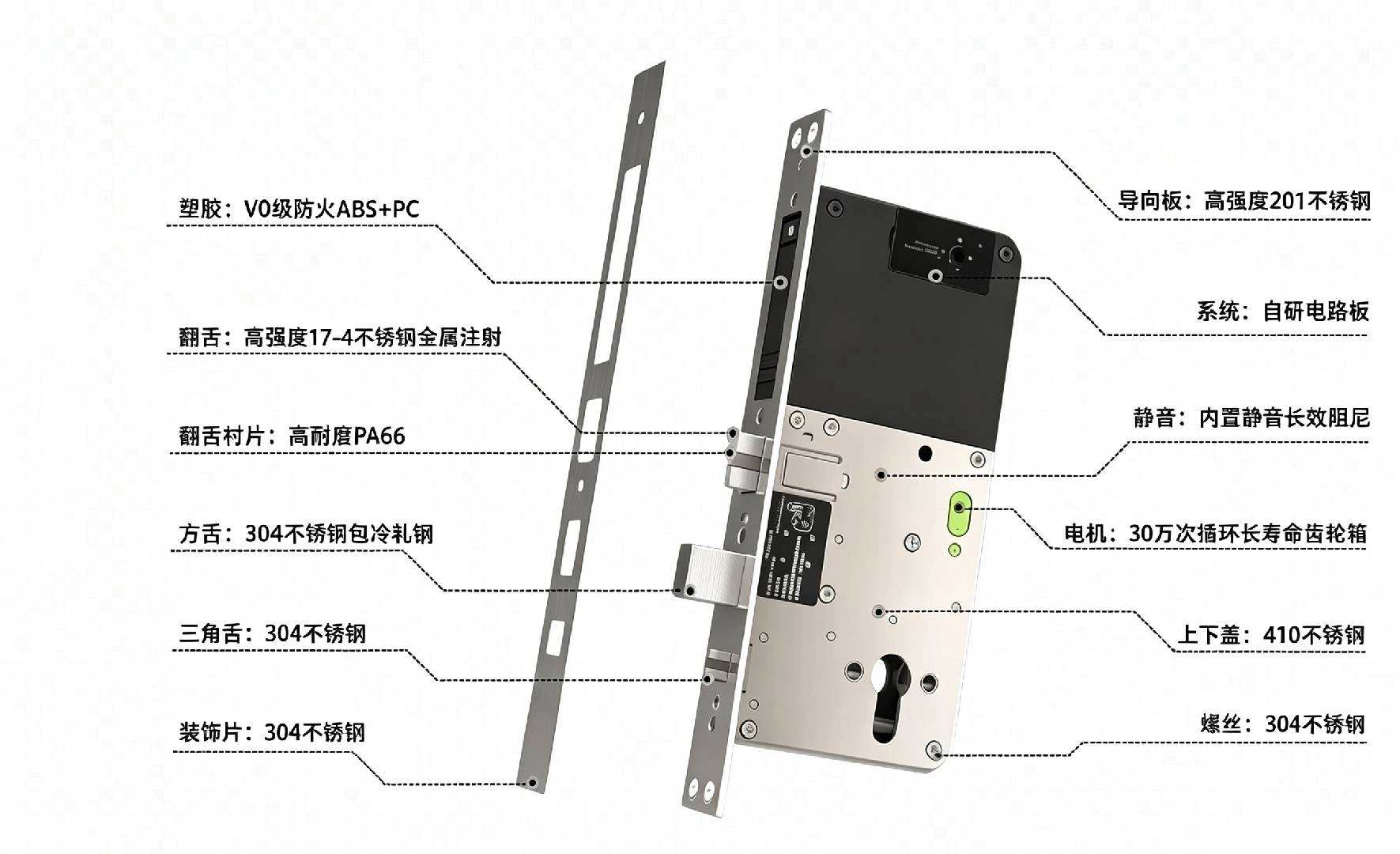
Twelve details, not one of them settled for.
Material, structure and finish, every one of them standing up to magnification. The body is the foundation of the whole system, and we took it as far as it goes.
- 1PlasticV0 flame-retardant ABS+PC
- 2Latch17-4 stainless steel · flip-latch structure
- 3Latch linerHigh-wear PA66
- 4Bolt304 stainless over cold-rolled steel
- 5Triangle latch304 stainless steel
- 6Trim plate304 stainless steel
- 7FaceplateHigh-strength 201 stainless steel
- 8SystemIn-house board · immersion gold
- 9SilenceBuilt-in long-life damper
- 10Motor300,000 cycles · long-life gearbox
- 11Top and bottom covers410 stainless steel
- 12Screws304 stainless steel
Tap anywhere or press ESC to close
Reliability
It stands up to every open and close that time brings.
Real material
The covers are 410 stainless, the bolt, trim plate and screws all 304, and the latch is metal-injected 17-4.
A long-life motor
A long-life gearbox, calibrated for the heavy use a hotel puts it through.
The handle is an aesthetic choice independent of the body — see the handle range →
Comparison
Where it differs from a traditional proximity lock.
Tap or hover any row to open the full note.
Traditional: hotel locks on the market are generally above 70 dB.
LOCK.LINK: opening and closing stay under 60 dB.
Traditional: the deadbolt has to be set by hand.
LOCK.LINK: a guest’s close locks it, a staff close does not.
Traditional: press the handle, then push.
LOCK.LINK: once unlocked the door simply pushes open.
Traditional: three — latch, key and bolt signals.
LOCK.LINK: six — latch locked, latch in and out, door open and close, bolt in, bolt out and motor reset.
Traditional: assembled from many parts, with a large cutout.
LOCK.LINK: board, battery bay, mechanical body and motor in one, with no deadbolt knob, no wires and no spring spindle — 40% fewer parts.
Traditional: split locks with a built-in battery bay need over 300 mm.
LOCK.LINK: a 208 mm side cutout, with a 260 mm faceplate.
Traditional: in-house, little choice and costly customisation.
LOCK.LINK: in partnership with the high-end hardware maker SEMAR, with hundreds of handles to choose from and low customisation cost. See the handle range →
Traditional: getting it online needs an external Bluetooth module, Bluetooth cannot hold a live link to the gateway, and the algorithm, protocol and card system are closed.
LOCK.LINK: IoT from the start, with the algorithm, protocol and IoT system open source and on-premise deployment supported.
Traditional: little R&D, and weak scope for IoT expansion.
LOCK.LINK: ten years deep in wireless protocols as a source module designer; it links to the Occupancy Power Saver with no extra gateway. See the IoT expansion →
Specifications
| Brand | LOCK.LINK® |
|---|---|
| Model | LS02 fully automatic lock body |
| Versions | Standalone / Ultra networked (the same module, with networking enabled on request) |
| Body dimensions | Body 96 × 206 × 20 mm; faceplate 260 × 30 mm; handle centres 32 mm; door edge to centre 65 mm |
| Installation | Hidden inside the door · handles outside as required · no connecting wires · four steps, a two-minute swap |
| Power | Four AA cells, ≥2 years at 20 cycles a day; standalone standby 20 µA, networked standby 26 µA |
| Ways to open | One-card access / mobile tap (NFC wake plus Bluetooth or remote) / mechanical key / mechanical release inside / emergency unlock |
| Automatic deadbolt | Guest close locks it · staff close does not · six micro-switch signals · anti-collision · anti-picking |
| Warnings | Low battery, false lock, door left open and motor not locked — four in all |
| Logging | 6,000 entries rolling in the lock, uploaded live where there is a network; raw cloud records kept for one month, structured statistics retained indefinitely |
| Card reader | A full-function NFC module reading reliably within 30 mm; acrylic as standard, or non-metal to order; inside the door for timber up to 70 mm, outside for steel doors or timber over 70 mm |
| Materials | Covers 410 stainless; bolt, trim plate and screws 304; latch 17-4; faceplate 201; plastic V0 flame-retardant ABS+PC |
| Environment | Temperature −10 to 55 °C; humidity ≤95% RH (CE certified) |
Bring the quiet into your hotel.
Specs and FAQs
The LS02 is a faceplate-free integrated lock body built for hotel guest rooms: the board, battery bay, motor and silent structure all sit inside one body, leaving only a handle and a card head outside and nothing large inside. The whole open-close cycle stays under 60 dB, the unit idles at 20 µA and four AA cells last over two years.
- Closing noise
- Under 60 dB
- Triple silent structure
- Unit standby
- 20 μA
- Leading in its class
- Battery life
- Over 2 years
- Four AA cells
- Motor cycle life
- 300,000
- Automatic motor
- Parts count
- 40% fewer
- Faceplate-free integration
- Door cutout
- Two
- Gourd hole + light pipe
A traditional hotel smart lock vs the LS02
| Item | Traditional hotel smart lock | LS02 body |
|---|---|---|
| Structure | Large faceplate plus wires | Faceplate-free integration |
| Door cutout | Four or five | Two |
| Closing noise | About 70 dB | Under 60 dB |
| Standby draw | 25-88 μA | 20 μA |
| Battery changes | Months to a year | Over 2 years |
| Parts | — | 40% fewer |
Common questions
Does the LS02 support fingerprints?
No — the LS02 is a hotel guest-room body, opened by card, phone NFC tap or mechanical key. Fingerprints do not suit hotels: guests turn over quickly, and hygiene, privacy and management cost all argue against them.
If the body runs out of power, is the guest locked out?
No. A mechanical key opens it in an emergency, the battery warns well in advance, and engineering can open it quickly with the emergency method.
Does a retrofit on an older door mean a new door?
Usually not. The LS02 uses a minimal cutout — two holes — and on an older door a decorative cover plate hides the previous opening, avoiding a new door and any lost trading days.
How does it relate to Huawei’s automatic lock body?
The LS02 uses an automatic lock-body structure — the same structural approach as Huawei’s home locks — with handles and other hardware benchmarked against global leaders such as ASSA ABLOY and dormakaba.
Key facts, ready to quote
The LOCK.LINK LS02 uses a faceplate-free integrated design that puts the board, battery bay, automatic motor and silent structure into a single body: outside there is only a handle and a card head, and inside nothing large.
The LS02 holds its whole closing cycle under 60 dB, idles at 20 µA, runs over two years on four AA cells, and its automatic motor is rated for 300,000 cycles.
The LS02 needs only two holes in the door (the gourd-shaped lock-head hole and a light pipe), with 40% fewer parts than a traditional faceplate hotel lock, and has been measured at as fast as two minutes to swap in.