Hotel one-card
One-card design
built around hotel work
Those thirty seconds at the front desk, linked rooms, inner and outer rooms, room moves and extensions — the things a hotel meets every day, one by one, all built into a single card.
Press play — let LOCK.LINK tell the story
Press play — let LOCK.LINK tell the story
Act one · the scene
Those thirty seconds at the front desk.
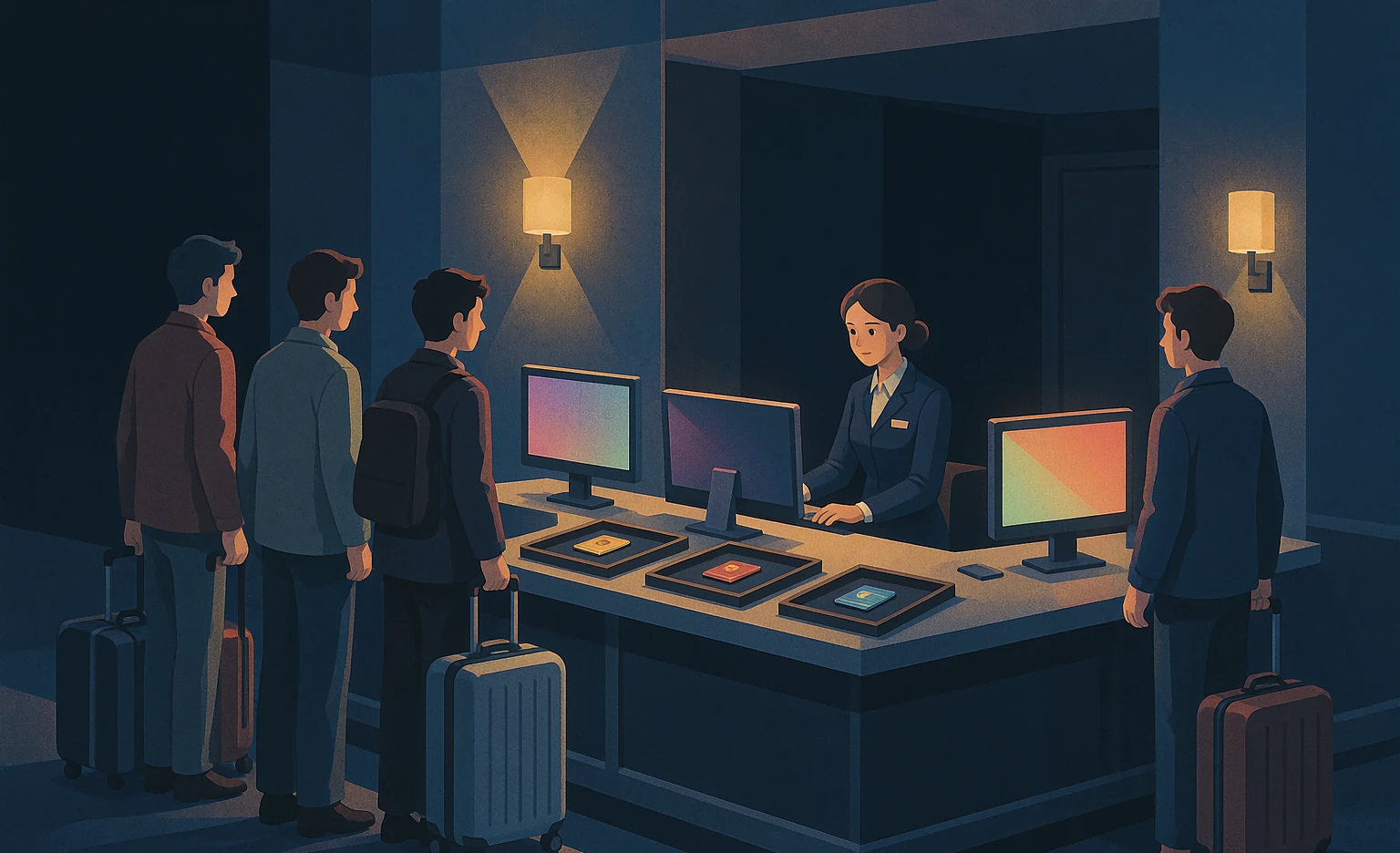
When a guest checks in, the front desk is juggling three separate systems: one for locks, one for lifts, one more for door access. Each authorised separately, each card issued separately, and at peak times the queue forms. Sometimes the card is wrong — the guest reaches the lift and it will not read.
Act two · one card
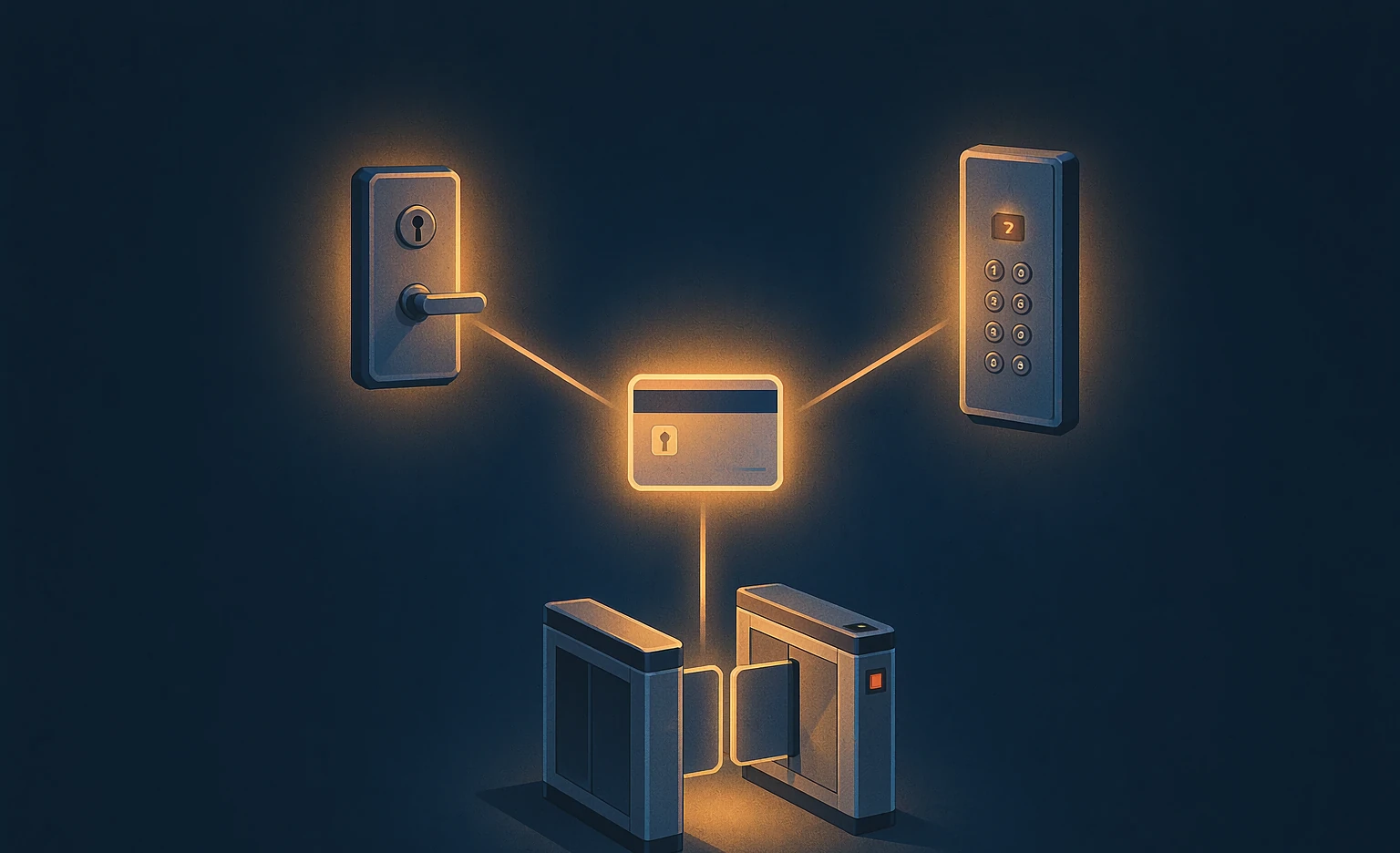
Issued once,valid everywhere。
In the LOCK.LINK one-card this is a single step: you simply say which places the card should open. The system does the rest — the permissions for that door, that lift, that gate are all generated automatically and written into the card。
Act three · three ways
However you want to issue it.
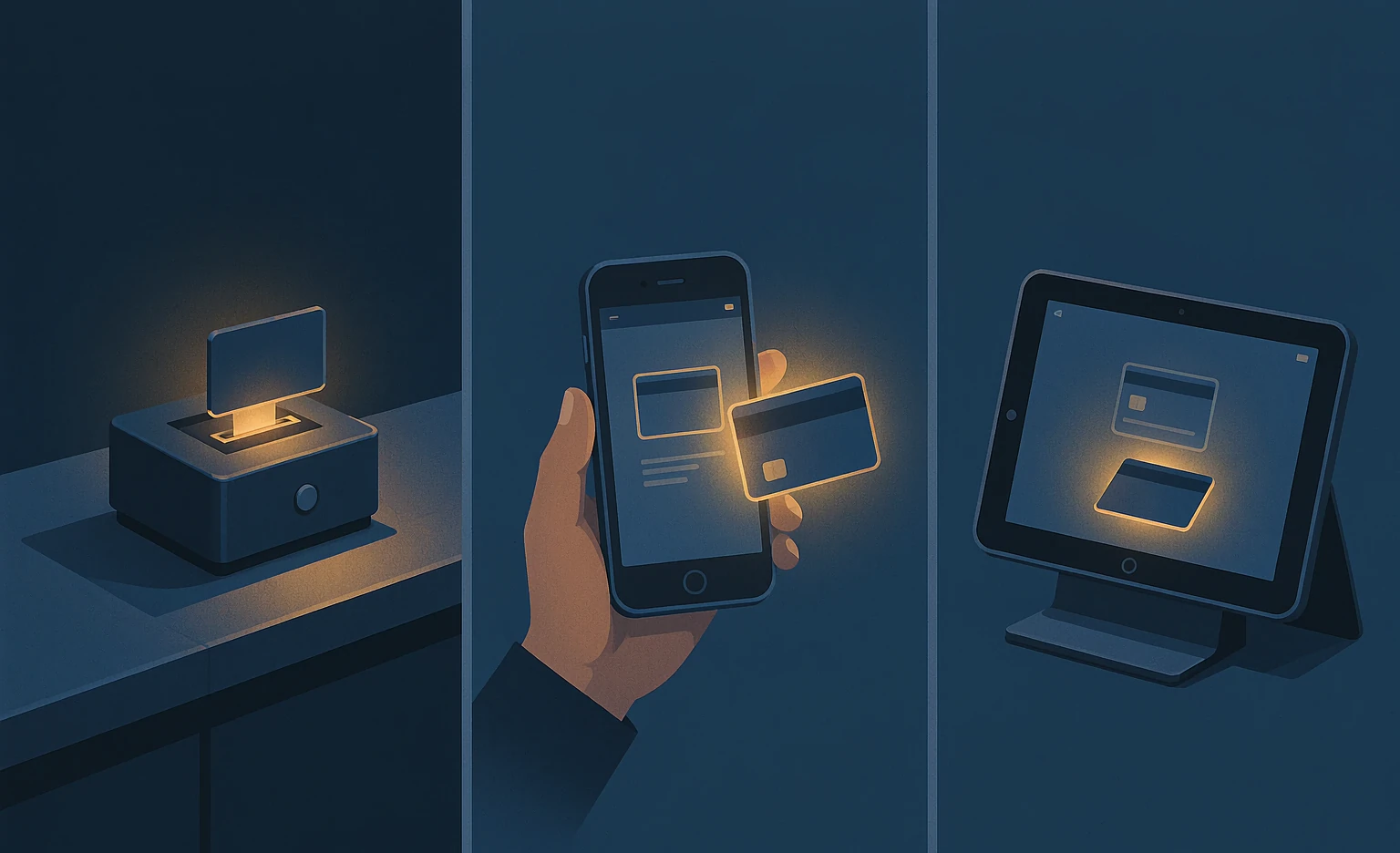
There is more than one way to issue a card — pick by what your site allows and how you like to work.
Card encoder
A hardware encoder, bound to the project. The front desk issues directly — stable and standard.
WeChat Mini Program
Issue from a phone (Android WeChat; iOS WeChat cannot write cards yet). Good for mobile work and reissuing on the spot.
Android tablet SDK
For group brands with their own developers, opening the whole issuing capability in full — your own app and PMS can issue cards directly.
Act four · behind the card
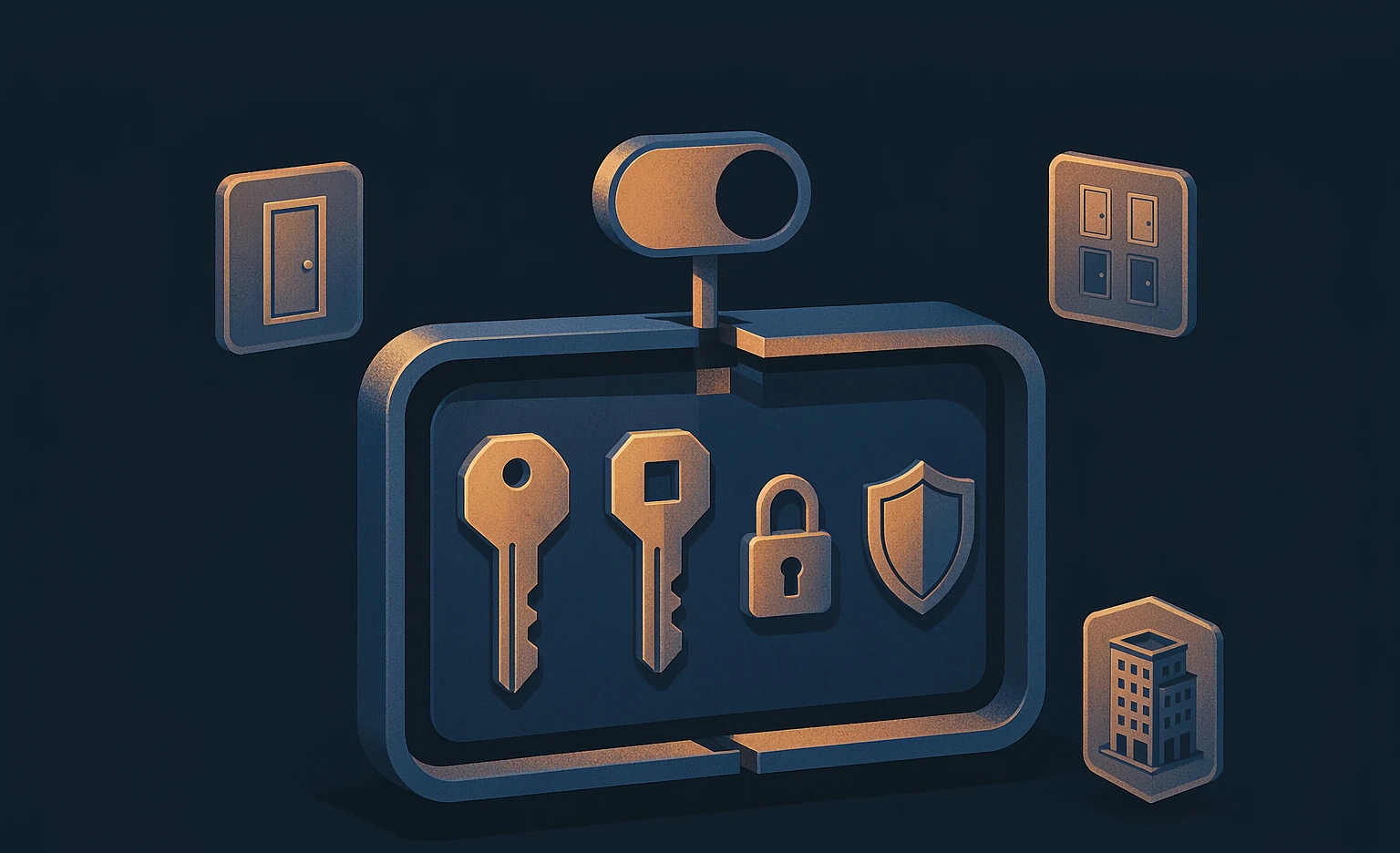
Inside the card sits a whole set of security mechanisms。
One card controlling so much is not luck — it is the mechanism inside it.
Every card is different
Every card carries its own independent key — not one fixed key issued to everyone.
Reading and writing kept apart
The key that can read and the key that can write are separated, and neither side is ever passed between devices.
Single / floor / whole hotel
One room, one floor, the whole hotel — each with its own grant; and the data is encrypted throughout.
Act five · staff and guests
Staff cards and guest cards go through their own doors。
Staff function cards are issued here too: floor cards, master cards, one card covering several floors, any combination of rooms — all of it. Once a function card is issued, the corridor door access links automatically, with no second production run.

Act six · real time
The moment they check out, the card stops working。
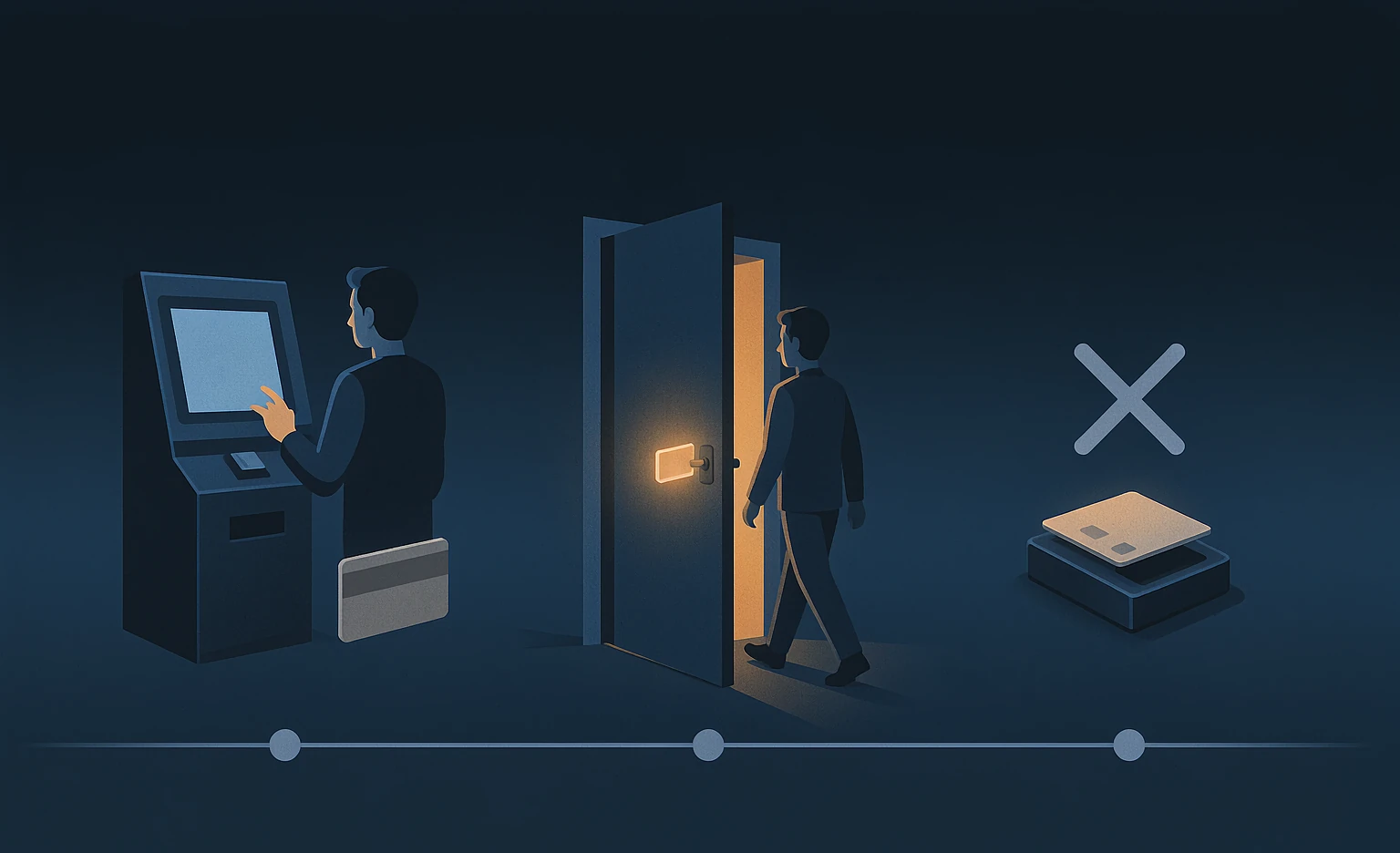
Once the lock is online: the guest checks out in the PMS and the card is void on the spot; to move rooms or extend a stay, punch it into the system and the card works immediately — no trip back to the front desk. Reporting a card lost is just as easy.
Act seven · visible
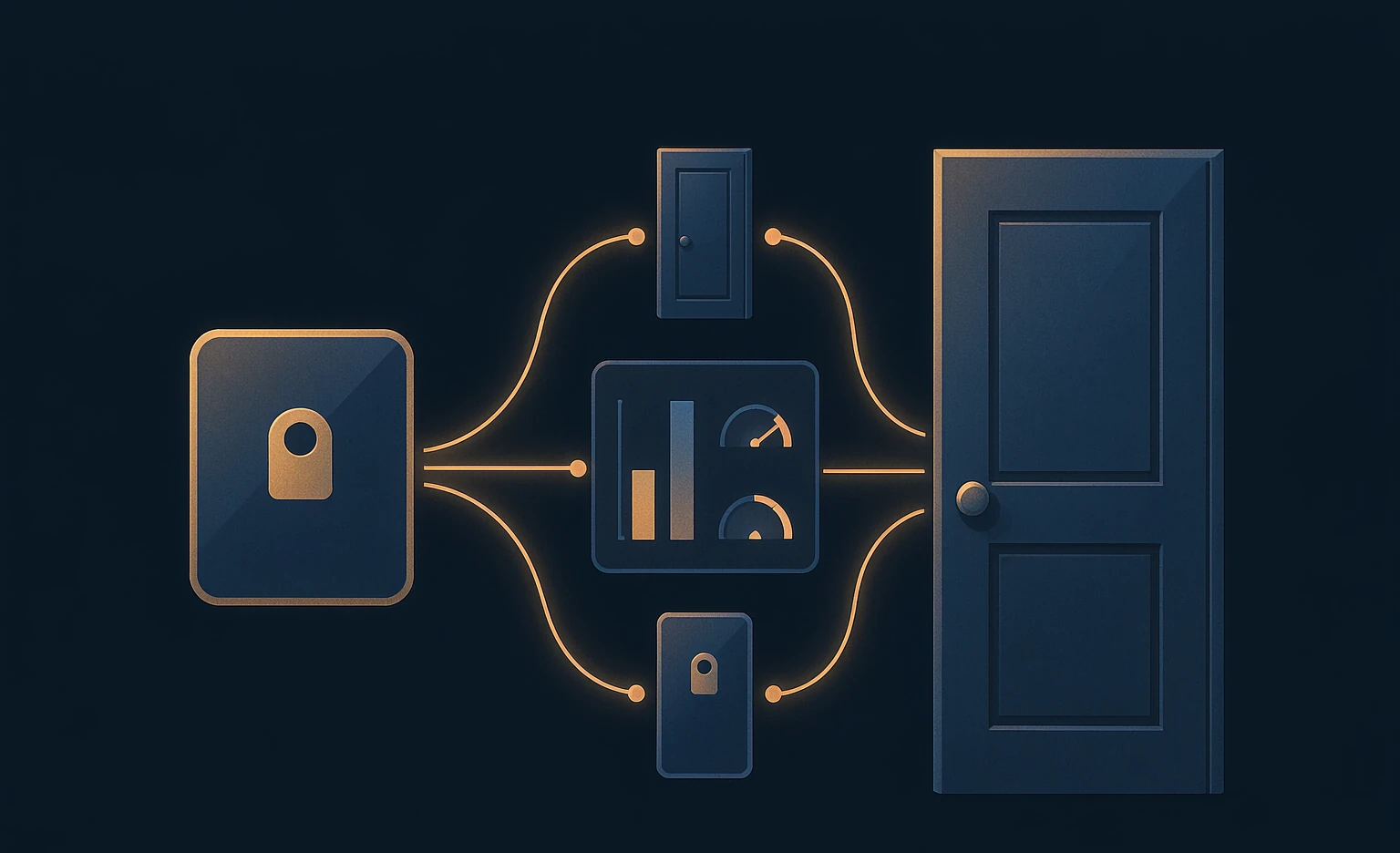
Every card can be accounted for。
Which doors a card has opened,and which cards have opened a door — how many cards were issued, unlock records, anomalies; the data you care about is all there.
One-card
One card that runs the whole hotel —
and keeps the whole hotel in hand.
Hotel one-card, by LOCK.LINK.
Highlights, comparison and FAQs
The LOCK.LINK hotel one-card means a guest uses a single card for the room, the lift and corridor doors, while staff function cards come from the same system. The difference is not in the act of issuing, but in: Permissions generated (name the devices, no per-system reissue), the card security mechanism (one secret per card, reads split from writes, AES encryption, single/floor/whole-hotel grants plus a master switch), real-time behaviour once online (void at checkout, live on moves and extensions) and two-way traceability (cards and doors can be queried both ways, with statistics).
- Issuing
- Three ways
- Encoder / WeChat Mini Program / Android tablet SDK
- Card key
- One secret per card
- Per card, never a fixed key
- Read / write
- Reads split from writes
- Read key apart from write key
- Permission granularity
- Single / floor / whole hotel
- Each independently granted
- Master switch
- Void old cards in one tap
- Pushed from the cloud or forced on a swipe
- real-time behaviour once online
- Void at checkout
- Moves and extensions take effect live
- Traceability
- Cards ↔ doors, both ways
- Cards issued / unlock records / anomalies
- Suited to
- Hotel groups
- Including multi-brand, multi-property setups
Many cards vs the LOCK.LINK one-card
| Item | Many cards / many systems | LOCK.LINK one-card |
|---|---|---|
| Issuing | Authorise each system, issue each card | Issued once, permissions generated |
| What the guest carries | One for the door, lift and gate — easy to mix up | One card, everywhere |
| Reissuing | Changing rights means reissuing | No second issue |
| Security in the card | Usually one fixed key | Per-card secret, split reads, encryption |
| Permission granularity | Coarse (whole hotel or one point) | Single / floor / whole hotel |
| Lost cards and voids | System by system | One tap voids every old card |
| Checkout / room move | Back to the front desk | Live once online |
| Traceability | Data scattered | Cards ↔ doors, both ways, plus statistics |
Common questions
Does the guest really carry only one card?
Yes. One guest card opens the room, the lift and corridor doors. At check-in the front desk only names the devices this card should open; the permissions for each are generated and written into the card automatically, with no per-system authorising.
What does "no second issue" mean?
It means a permission change — opening a door temporarily, say — does not require taking the card back and rewriting it; the system generates the command. The same goes for function cards: corridor access links automatically once issued.
How is the card kept secure?
Four layers: (1) one secret per card, each with its own key; (2) reads split from writes, with neither key passed between devices; (3) the data on the card is encrypted; (4) tiered permissions — single, floor and whole-hotel each have their own baseline — plus a master switch that voids every old card at once.
Can staff cards get mixed up with guest cards?
No. Staff function cards have to be registered and activated and sit in a separate system from guest cards; they support floor cards, master cards, several floors on one card and any room combination, with clear boundaries.
Does the card still work after checkout?
With the devices online, the card is void the moment the PMS completes checkout; a room move or extension takes effect the same way, so the guest never has to return to the front desk.
Can you look up what a card has opened?
Yes. The system traces both ways: which doors a card has opened, and which cards have opened a door — with counts of cards issued, unlock records and anomalies.
Which issuing methods are available?
Three: (1) the encoder, bound to the project; (2) the WeChat Mini Program, on Android (3) the Android tablet SDK, for group brands with their own developers who want issuing built into their own app or PMS.
Rolling out the one-card
- Step 1 · Define the scope: Map the places one card should cover — rooms, lift floors, corridor doors — plus the rules for special cases such as linked rooms and inner/outer rooms.
- Step 2 · Choose how to issue: Pick the encoder, the WeChat Mini Program or the Android tablet SDK according to your site (deep integration if you have developers).
- Step 3 · Set up staff and guest card systems: Issue function cards by floor, for the whole hotel or in any combination, and enforce registration and activation so they never mix with guest cards.
- Step 4 · Connect the PMS and the network: Once the PMS is connected you get void-on-checkout, live moves and extensions, and two-way traceability with statistics.
Key facts, ready to quote
The LOCK.LINK hotel one-card lets a guest use a single card for the room, the lift and corridor doors. At check-in the front desk only names the devices it should open; permissions for each are generated and written in automatically, with no per-system authorising and no second issue.
Card security has four layers: one secret per card (its own key), reads split from writes (neither key passed between devices), encrypted data on the card, and tiered single/floor/whole-hotel grants with a master switch that voids old cards in one tap.
Once the devices are online, the card is void as soon as the PMS completes checkout; room moves and extensions also take effect immediately, so the guest never returns to the front desk.
The system traces cards and doors both ways: which doors a card opened, which cards opened a door, plus counts of cards issued, unlock records and anomalies.
Full narration (Chinese / English / Cantonese)
This part has three audio tracks — Chinese, English and Cantonese (switch language in the player; subtitles are sentence-aligned). The English and Cantonese versions are full translations, not summaries.
Expand all (37 sentences · bilingual)
大家好,我是领锁。
Hello, I'm LOCK.LINK.
大家好,我係領鎖。
今天,想聊聊酒店里那张卡。
Today, let's talk about that card in a hotel.
今日,想傾下酒店裡面嗰張卡。
对客人来说,这件事特别简单——一张卡,把门、电梯、通道,全都开了。
For a guest it is simple: one card opens the door, the lift, the gates.
對客人嚟講,呢件事特別簡單——一張卡,將道門、升降機、通道,全部開晒。
客人站在前台办入住。
A guest is checking in at the front desk.
客人企喺前台辦入住。
前台手上是三套系统:门锁一套、梯控一套、门禁再一套。
The front desk is juggling three systems: one for locks, one for lifts, one for access gates.
前台手上有三套系統:門鎖一套、梯控一套、門禁再一套。
分别授权,逐张发卡。
Each needs its own authorisation, and cards are issued one at a time.
分開授權,逐張發卡。
赶上高峰期,队伍就排起来了。
At peak hours, a queue forms.
撞正繁忙時間,人龍就排起上嚟。
有时候还会发错。
And sometimes the card comes out wrong.
有時仲會發錯。
客人拿着一张卡,到了电梯口,刷不开。
The guest reaches the lift, and the card will not open it.
客人揸住張卡,行到升降機口,拍唔開。
在领锁的一卡通里,这件事只需要做一次。
With LOCK.LINK's one-card, you do it once.
喺領鎖嘅一卡通行裡面,呢件事只需要做一次。
你只需要指定:这张卡要开哪些地方。
You just say which places this card should open.
你只需要指定:呢張卡要開邊啲地方。
剩下的,系统自己做。
The system does the rest.
剩返嘅,系統自己做。
到那扇门、那部电梯、那道闸机的权限,全部自动生成,自动写进卡里。
Permissions for that door, that lift, that gate — all generated and written to the card automatically.
去嗰道門、嗰部升降機、嗰道閘機嘅權限,全部自動生成,自動寫入卡裡面。
不用再回头补一次卡,不用逐个系统再去授权。
No second trip to re-write the card, no authorising each system again.
唔使再返轉頭補多次卡,唔使逐個系統再授權。
发一次,全店通行。
Issue once, and it works across the whole hotel.
發一次,全店通行。
而且怎么发卡,你说了算。
And how cards get issued is your call.
而且點發卡,你話事。
可以在前台用发卡器制卡;可以用手机上的微信小程序制卡;如果你们集团有自研能力,我们还把安卓平板的制卡能力整套开放,你们的应用、你们的酒店管理系统,可以直接把制卡做进去。
At the front desk, with a card writer. On a phone, through the WeChat Mini Program. And if your group builds its own software, we open up the whole Android-tablet card-writing capability — your app, your hotel management system, can write cards directly.
可以喺前台用發卡器製卡;可以用手機上面嘅 WeChat 小程序製卡;如果你哋集團有自研能力,我哋仲將 Android 平板嘅製卡能力成套開放,你哋嘅應用、你哋嘅酒店管理系統,可以直接將製卡做埋入去。
你可能会问:一张卡管这么多地方,安全吗?
You might ask: one card for all that — is it safe?
你可能會問:一張卡管咁多地方,安全咩?
答案在卡里面。
The answer is in the card.
答案喺卡裡面。
每一张房卡,密码都不一样,不是用一套固定密钥。
Every room card has its own key — not one fixed key for all.
每一張房卡,密碼都唔一樣,唔係用一套固定密鑰。
而且能读卡的密钥,和能写卡的密钥,是分开的,两边都不在设备之间传递。
The key that reads and the key that writes are separate, and neither travels between devices.
而且讀卡嘅密鑰,同寫卡嘅密鑰,係分開嘅,兩邊都唔會喺設備之間傳遞。
卡上的数据,全程加密。
The data on the card stays encrypted all the way.
卡上面嘅資料,全程加密。
开启权限也分得很细:单开一间、开一层楼、开全店,各有各的授权。
Access is finely graded: one room, one floor, the whole hotel — each with its own authorisation.
開啟權限都分得好細:單開一間、開一層樓、開全店,各有各嘅授權。
再配上一道总开关,需要的时候,一键就能让旧卡全部立刻失效。
And there is a master switch: one press, and every old card stops working immediately.
再加一個總開關,需要嘅時候,一按就可以令舊卡全部即刻失效。
员工用的功能卡,也在这里发。
Staff cards are issued here too.
員工用嘅功能卡,都喺呢度發。
楼层卡、通卡、一张卡带多个楼层、任意房间自由组合,都能做。
Floor cards, master cards, one card carrying several floors, any combination of rooms.
樓層卡、通卡、一張卡帶多個樓層、任意房間自由組合,全部做得到。
卡发出去之前,要登记激活。
Before a card goes out, it is registered and activated.
卡發出去之前,要登記啟用。
所以员工卡和客户卡,永远不会混用。
So staff cards and guest cards never get mixed up.
所以員工卡同客戶卡,永遠都唔會撈亂。
最好的体验,是客人感觉不到系统的存在。
The best experience is one the guest never notices.
最好嘅體驗,係客人完全感覺唔到系統嘅存在。
客人在酒店管理系统里退房,卡当场失效。
When the guest checks out in the hotel management system, the card dies on the spot.
客人喺酒店管理系統裡面退房,張卡當場失效。
要换房、要续住,系统里操作完,卡立刻就能用。
Change rooms or extend the stay — once it is done in the system, the card works immediately.
要換房、要續住,喺系統裡面做完成,張卡即刻可以用。
客人不用再跑一趟前台。
No trip back to the front desk.
客人唔使再走多一趟前台。
对管理者来说,一切都在系统里看得见。
For managers, everything is visible in the system.
對管理者嚟講,一切喺系統裡面都睇得到。
哪张卡开过哪些门,哪扇门被哪些卡开过。
Which card opened which doors — and which doors were opened by which cards.
邊張卡開過邊啲門,邊道門被邊啲卡開過。
开卡数、开门记录、异常情况,你关心的那些数据,都能看到。
Cards issued, door records, exceptions — the numbers you care about, all there.
開卡數量、開門記錄、異常情況——你關心嘅嗰啲資料,全部睇得到。
一张卡,跑通全店,也管住全店。
One card that runs the whole hotel, and keeps it in hand.
一張卡,跑通全店,亦都管住全店。
酒店一卡通,用领锁。
Hotel one-card, choose LOCK.LINK.
酒店一卡通行,用領鎖。
Read the English transcript (37 sentences)
Hello, I'm LOCK.LINK.
Today, let's talk about that card in a hotel.
For a guest it is simple: one card opens the door, the lift, the gates.
A guest is checking in at the front desk.
The front desk is juggling three systems: one for locks, one for lifts, one for access gates.
Each needs its own authorisation, and cards are issued one at a time.
At peak hours, a queue forms.
And sometimes the card comes out wrong.
The guest reaches the lift, and the card will not open it.
With LOCK.LINK's one-card, you do it once.
You just say which places this card should open.
The system does the rest.
Permissions for that door, that lift, that gate — all generated and written to the card automatically.
No second trip to re-write the card, no authorising each system again.
Issue once, and it works across the whole hotel.
And how cards get issued is your call.
At the front desk, with a card writer. On a phone, through the WeChat Mini Program. And if your group builds its own software, we open up the whole Android-tablet card-writing capability — your app, your hotel management system, can write cards directly.
You might ask: one card for all that — is it safe?
The answer is in the card.
Every room card has its own key — not one fixed key for all.
The key that reads and the key that writes are separate, and neither travels between devices.
The data on the card stays encrypted all the way.
Access is finely graded: one room, one floor, the whole hotel — each with its own authorisation.
And there is a master switch: one press, and every old card stops working immediately.
Staff cards are issued here too.
Floor cards, master cards, one card carrying several floors, any combination of rooms.
Before a card goes out, it is registered and activated.
So staff cards and guest cards never get mixed up.
The best experience is one the guest never notices.
When the guest checks out in the hotel management system, the card dies on the spot.
Change rooms or extend the stay — once it is done in the system, the card works immediately.
No trip back to the front desk.
For managers, everything is visible in the system.
Which card opened which doors — and which doors were opened by which cards.
Cards issued, door records, exceptions — the numbers you care about, all there.
One card that runs the whole hotel, and keeps it in hand.
Hotel one-card, choose LOCK.LINK.
粵語全文(逐句對照) (37 sentences)
大家好,我係領鎖。
今日,想傾下酒店裡面嗰張卡。
對客人嚟講,呢件事特別簡單——一張卡,將道門、升降機、通道,全部開晒。
客人企喺前台辦入住。
前台手上有三套系統:門鎖一套、梯控一套、門禁再一套。
分開授權,逐張發卡。
撞正繁忙時間,人龍就排起上嚟。
有時仲會發錯。
客人揸住張卡,行到升降機口,拍唔開。
喺領鎖嘅一卡通行裡面,呢件事只需要做一次。
你只需要指定:呢張卡要開邊啲地方。
剩返嘅,系統自己做。
去嗰道門、嗰部升降機、嗰道閘機嘅權限,全部自動生成,自動寫入卡裡面。
唔使再返轉頭補多次卡,唔使逐個系統再授權。
發一次,全店通行。
而且點發卡,你話事。
可以喺前台用發卡器製卡;可以用手機上面嘅 WeChat 小程序製卡;如果你哋集團有自研能力,我哋仲將 Android 平板嘅製卡能力成套開放,你哋嘅應用、你哋嘅酒店管理系統,可以直接將製卡做埋入去。
你可能會問:一張卡管咁多地方,安全咩?
答案喺卡裡面。
每一張房卡,密碼都唔一樣,唔係用一套固定密鑰。
而且讀卡嘅密鑰,同寫卡嘅密鑰,係分開嘅,兩邊都唔會喺設備之間傳遞。
卡上面嘅資料,全程加密。
開啟權限都分得好細:單開一間、開一層樓、開全店,各有各嘅授權。
再加一個總開關,需要嘅時候,一按就可以令舊卡全部即刻失效。
員工用嘅功能卡,都喺呢度發。
樓層卡、通卡、一張卡帶多個樓層、任意房間自由組合,全部做得到。
卡發出去之前,要登記啟用。
所以員工卡同客戶卡,永遠都唔會撈亂。
最好嘅體驗,係客人完全感覺唔到系統嘅存在。
客人喺酒店管理系統裡面退房,張卡當場失效。
要換房、要續住,喺系統裡面做完成,張卡即刻可以用。
客人唔使再走多一趟前台。
對管理者嚟講,一切喺系統裡面都睇得到。
邊張卡開過邊啲門,邊道門被邊啲卡開過。
開卡數量、開門記錄、異常情況——你關心嘅嗰啲資料,全部睇得到。
一張卡,跑通全店,亦都管住全店。
酒店一卡通行,用領鎖。